
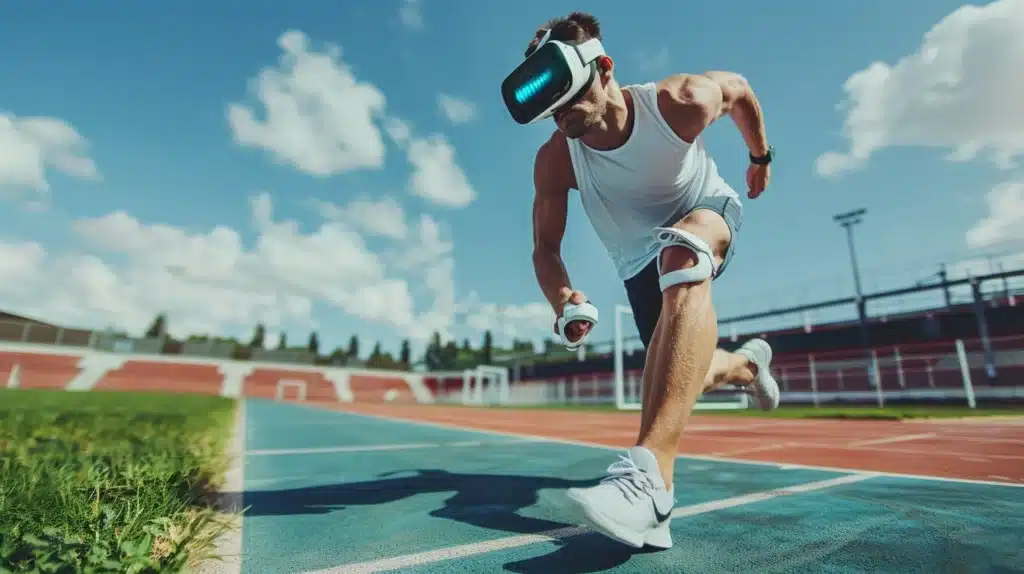
The shift from gut feeling to quantified training is well underway. Wearables have moved from novelty to core infrastructure for athletes across levels. Sensors now track movement, heart rhythms, power output, and sleep, feeding models that turn raw signals into daily guidance. The result is a training environment where decisions rely on evidence, not hunches, and where feedback arrives in seconds instead of weeks.
What sets this moment apart is not only the volume of data but also its direct link to behavior. Athletes get prompts during a session, coaches receive dashboards between sessions, and medical staff track trends across seasons. The same tools that inform practice also shape competition strategy and roster decisions; for some followers, even live viewing habits and odds checking flow through this website, and the presence of real-time numbers nudges how people interpret form and risk.
What wearables actually capture
Modern devices collect time-series data from multiple sensors: inertial units for acceleration and rotation, optical and electrical signals for heart rate, GPS for position and speed, pressure for ground contact, and temperature for heat stress. The value is not the sensor itself but the fusion of streams. A sprint, for example, becomes a combination of stride length, contact time, peak force, and recovery heart rate. Over weeks, that picture reveals not just how fast someone ran but how they produced that speed and how they rebounded after.
Sampling rate matters. High-frequency data exposes micro-changes in technique that simple averages hide. In strength work, bar path and velocity show whether fatigue alters mechanics. In endurance work, the link between pace, effort, and cardiac response shows efficiency gains or losses.
From numbers to cues: the coaching layer
Data without interpretation clutters practice. The coaching layer translates metrics into short cues. If ground contact time rises late in a rep, the athlete receives a prompt about posture or foot strike. If heart rate takes longer to recover after similar workloads, the next session shifts to lower intensity. Coaches can test a cue, watch the data react, and keep or discard the change. This creates a tight loop: hypothesis, intervention, response.
The same loop supports skill acquisition. Small changes in joint angles can be rehearsed with immediate feedback. Video and sensor data align, so athletes see the movement and the metric together. That pairing speeds learning because it links feel to an external signal.
Load management and the new calendar
A core promise of wearables is better control of load. Acute spikes in work raise injury risk; chronic underload stalls progress. By tracking external load (distance, velocity, impacts) and internal load (heart rate, perceived exertion), staff can smooth the week and the month. Travel, sleep disruption, and heat add hidden load that sensors expose. Schedules now bend to readiness: hard days land when recovery metrics are stable, and deloads arrive before breakdown, not after.
For team sports, shared data changes selection. Lineups reflect who can sustain high-intensity efforts, not only who produced results last week. Substitution patterns, minute limits, and set-piece roles adjust in real time, guided by thresholds that balance output and risk.
Injury risk: probability, not prophecy
No device can guarantee injury prevention, but trends help. Rising asymmetry, slower recovery, and altered force profiles warn of stress that may exceed tissue capacity. The medical team can alter drills, reduce volume, or adjust surfaces. Post-injury, return-to-play decisions rely on objective matches to pre-injury baselines rather than simple time since event. This reduces the pressure to rush and supports confidence when the athlete is cleared.
Importantly, risk models must be humble. They work best as early warnings, not final verdicts. Communication remains key; athletes who understand why a session changes are more likely to buy in.
Tactics and in-competition use
Live data informs tactical choices. Pace lines in endurance events adjust to heat stress. Defensive schemes in team sports shift when sprint counts flag. Coaches monitor high-intensity bursts to decide when to rotate. Some leagues limit the type and timing of live data use; others allow broad access. Where permitted, the line between training tool and in-game tool blurs, and staff roles evolve to include rapid analysis and clear, short instructions.
Youth development and pathway changes
For younger athletes, wearables shape how skills are taught. Coaches can reinforce safe volume limits, maintain technique under load, and build awareness of recovery habits. Because feedback is immediate, learning becomes iterative and less dependent on long, delayed reviews. However, early specialization risks increase if numbers replace play. Development programs that keep variety—multiple sports, mixed drills, free play—pair the benefits of data with broad movement literacy.
Data governance, consent, and trust
Performance data is sensitive. It affects contracts, selection, and public perception. Clear rules on ownership, access, and retention are essential. Athletes should know who sees their data, for what purpose, and for how long. Consent must be informed and revocable. Aggregated insights can help the group without exposing individuals. Independent oversight builds trust, especially when careers and reputations are at stake.
Transparency also applies to algorithms. Black-box readiness scores invite skepticism. When staff explain inputs and limits, compliance improves. When metrics are audited against outcomes, models get better and earn credibility.
Access, equity, and the resource gap
Advanced systems cost money and time. Larger programs can fund sensors, analysts, and specialists; smaller programs cannot. If results hinge on data access, gaps will widen. Two mitigations help: open standards that reduce lock-in and pooled services that spread cost across clubs or schools. Coaching education is also leverage; many gains come from smarter session design and consistent recovery habits, which do not require high-end hardware.
The psychology of constant feedback
More numbers are not always better. Some athletes thrive on detailed dashboards; others perform worse under constant monitoring. Programs that allow personalization—choosing which metrics to see and when—avoid overload. Coaches can shift from surveillance to partnership by using data to start conversations rather than issue orders. The aim is autonomy supported by evidence, not compliance driven by charts.
What the next phase may bring
Three developments look likely:
- Richer context: Environmental sensors (heat, air quality, altitude) will join movement and heart data, making prescriptions more precise.
- Closed-loop drills: Training tools will adjust resistance or pace automatically based on live signals, turning targets into self-tuning sessions.
- Interoperability: Standards will let devices, video, and planning tools share data without manual steps, reducing friction and errors.
These gains will not remove coaching judgment. They will raise the floor of daily decisions, make progress more consistent, and reveal problems before they grow.
A new contract between effort and evidence
Wearables have not replaced hard work; they have changed when and how to apply it. The path to performance now runs through measurement, interpretation, and clear action. When athletes, coaches, and medical staff align on those steps, training becomes a system rather than a set of sessions. The champions who emerge from this system will still rely on resilience and skill. The difference is that fewer days will be wasted, fewer risks will be blind, and more choices will be grounded in what the body is actually doing—not what we assume it can do.