
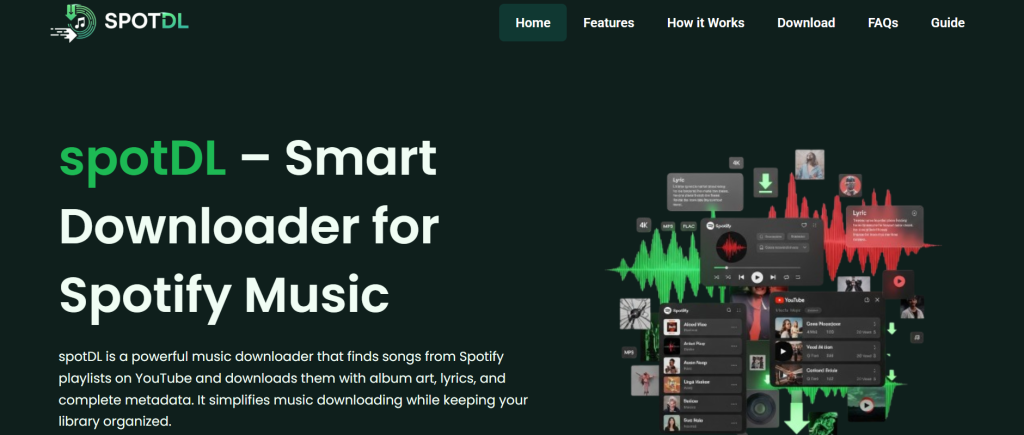
Many users who explore music tools like SpotDL often ask whether it is legal to use for downloading songs. The answer is not completely simple, because legality depends on how the tool is used, what is being downloaded, and the copyright laws of your country.
SpotDL itself is just a software tool, but the legality comes from the type of music being downloaded and whether proper permission exists to download it.
SpotDL Itself Is Legal Software
SpotDL is an open-source program, meaning its code is publicly available and it is legal to create and distribute the tool itself. It does not contain copyrighted music, and it does not directly store or host any songs.
Because of this, the software on its own is not illegal. It works as a utility that processes Spotify links and finds matching audio from other online sources.
How SpotDL Works Matters
SpotDL does not download music directly from Spotify servers. Instead, it uses Spotify metadata (song name, artist, album, etc.) and searches for matching audio from external sources like YouTube.
This means the tool is technically acting as an automated search and download system rather than a direct Spotify downloader. However, the legality depends on what content is being downloaded from those sources.
Copyright Laws Apply
In most countries, songs are protected by copyright laws. Downloading copyrighted music without permission from the owner or license holder may be illegal, even if the tool itself is legal.
If a song is not freely licensed or publicly available for download, saving it as an MP3 using tools like SpotDL may violate copyright rules depending on your region.
Personal Use vs Illegal Distribution
Some users assume that downloading music for personal use is always legal, but this is not true everywhere. Laws differ by country.
In some places, personal offline copies may be allowed under fair use or private copying rules. In other regions, any unauthorized download of copyrighted music is not permitted, even for personal use.
Spotify Terms of Service
Even if local laws are unclear, using SpotDL may still go against the terms of service of Spotify.
Spotify is designed for streaming and licensed offline downloads through its official app only. Using third-party tools to extract music may violate these terms, which can lead to account-related restrictions in some cases.
Legal Use Cases of SpotDL
There are situations where SpotDL usage is generally considered legal, such as:
- Downloading royalty-free music
- Using songs with Creative Commons licenses
- Downloading content you own or have permission for
- Testing or educational purposes
In these cases, the software itself is being used within legal boundaries.
Illegal or Risky Use Cases
Using SpotDL may become legally risky when:
- Downloading copyrighted commercial songs without permission
- Distributing downloaded music to others
- Uploading converted songs to public platforms
- Bypassing paid music streaming restrictions
These actions may violate copyright laws in many regions.
Ethical Considerations
Even when something is technically possible, it may not always be ethically correct. Artists, producers, and record labels rely on streaming platforms like Spotify for revenue.
Using tools like SpotDL responsibly means respecting creators’ rights and supporting legal music distribution whenever possible.
Safety vs Legality
It is also important to separate safety from legality. SpotDL is generally safe software when downloaded from trusted sources, but legality depends on usage.
A tool can be safe to install but still be used in ways that may not comply with copyright laws.
Conclusion
SpotDL itself is legal as a software tool, but its legality for downloading songs depends entirely on how it is used and what content is being downloaded.
Downloading royalty-free or properly licensed music is generally fine, while downloading copyrighted songs without permission may violate laws or platform terms. Users should always understand local copyright regulations and use tools like SpotDL responsibly and ethically.